If you've experienced a tree or heavy branch crashing onto your home, you'll know how much of a shock and even scary it can be. And if you haven't experienced this, well, I hope you never do! Sadly, this is something that most homeowners will experience at some point, especially if you live in Sydney, where severe storms can hit without warning.
A fallen tree or branch that damages your home can leave you feeling shocked, stressed, and unsure of what to do next. Acting in a panic can increase the risk of injury or further damage. But keeping a clear head and acting fast can make all the difference in an emergency! Taking safe, structured steps will help protect you, your family and your home. It will also help when arranging emergency roof repairs and dealing with insurance.
In this blog post, I'll show you exactly how to safely and calmly handle severe tree damage to your roof. This way, you can protect your home and get your roof repaired quickly and with as little stress as possible!
The most important step that you need to take FIRST, before anything else in an emergency, is to evacuate the affected area immediately. You should not stop to pick up any of your belongings or check out the damage, just get out of there! A heavy impact from a branch or tree falling can weaken your roof frame, ceiling supports and even nearby walls. Even if your home looks stable, there could still be hidden damage that can cause a sudden collapse.
If there is anyone in the rooms affected by the tree damage, you want to get them out right away. You should also keep out of any adjoining spaces if there are signs of sagging ceilings, cracking plaster, falling debris, or unusual creaking sounds. It is always safer to assume the area is unstable until a qualified emergency roof repair professional has properly assessed it!
Calmly get your children, other family members, and pets to a safe zone well away from the damaged section of your home. If the impact is severe, if water is entering the property, or if multiple rooms have been affected, it's best to leave the house entirely and wait in a secure location, like a friend's or neighbour's house. For official guidance on storm emergencies and safety, you can always consult the NSW State Emergency Service (SES).
Once the storm has passed and it is safe to go outside, you can assess the damage, but from the ground only! Do not climb onto the roof under any circumstances, especially if it is wet, slippery, unstable, or still covered with branches and debris. A roof that has taken a heavy impact can have hidden structural weakness, and one wrong step could cause a fall or trigger further collapse.
When it's safe to do so, you can walk slowly around the perimeter of your house and look up from several angles. Try to get a clear look at the affected area without stepping beneath hanging branches or standing too close to damaged sections. Binoculars or your phone camera zoom can help you inspect the roof more safely from a distance.
Look for obvious warning signs such as:
You should also check for debris around the home, leaning chimneys, damaged skylights, and signs that branches may have struck power lines. If anything looks unstable or dangerous, keep your distance and contact your local emergency roof repairs team for a proper assessment.
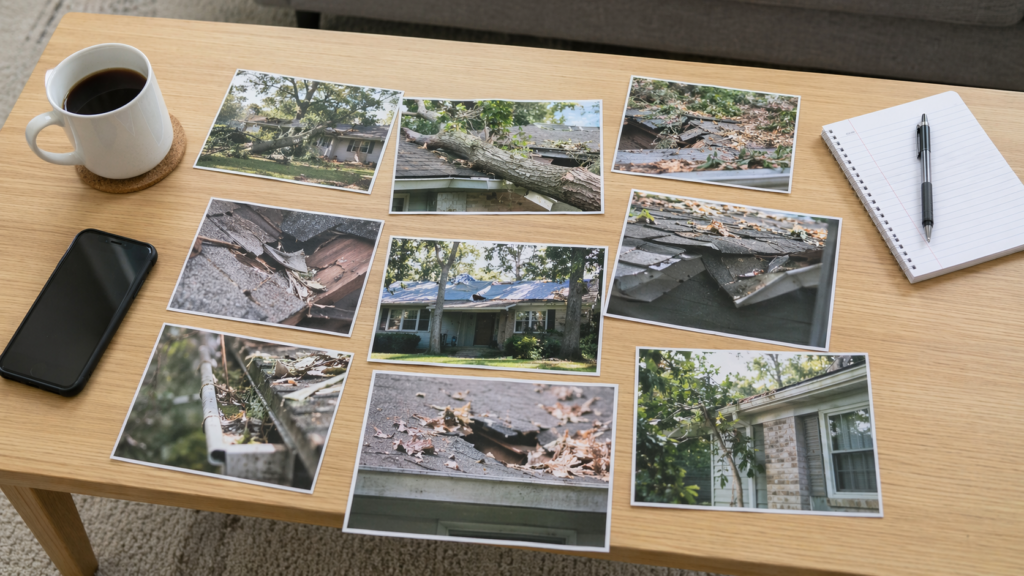
The next step is documenting the damage. Doing this properly is really important after a tree or branch hits your roof, especially if you plan to lodge an insurance claim. Documenting clear evidence helps you show the extent of the impact, support the timing of the incident, and make it easier for your insurer and emergency roof repairs team to understand what happened. Good documentation can also help you prevent disputes about the cause or severity of the damage!
To do this, take clear photos and short videos only from a safe ground-level distance. Do not climb onto the roof or attempt to get a closer look from above! A roof struck by a tree or heavy branch is likely unstable, and broken materials, leaves, and debris can be incredibly slippery underfoot. Please stay on solid ground and don't attempt getting up on the roof yourself. Leave that to the emergency roof repair professionals!
Here's what you want to get clear pictures of, if it is safe to do so:
You should also note the date, time, and weather conditions. It might seem like a lot, but it will come in very useful later when talking with your roof repair team and your insurer.
Once everyone is safe and the damage has been documented, the next step is to bring in the professionals! Severe tree damage usually requires more than one service. In many cases, you will need both tree removal specialists and emergency roof repair experts working together. The tree or large branch must be removed carefully to avoid placing even more pressure on the damaged roof, and the exposed area must then be repaired quickly to prevent further weather damage.
This is not a job for general cleanup or a temporary do-it-yourself fix. A damaged roof may have hidden structural issues, unstable materials, and openings that allow rain to enter the home. Emergency roofers can assess the immediate risk, carry out temporary protection such as tarping or sealing, and help prevent water intrusion, mould, and escalating repair costs while permanent work is arranged.
A great emergency roof repair team will bring:
Choosing a local team is best, as local professionals can usually respond faster, understand the weather conditions in your area, and handle urgent storm-related roof damage efficiently. If you are in the region, bringing in a rapid-response team like KLD Roof Repairs for emergency roof repairs helps you get your home back to normal as soon as possible.

Once the immediate danger has passed and your household is safe, you should contact your home insurance provider as soon as possible! The earlier you notify them, the sooner you can start the insurance claim. If you don't notify them early, you'll likely face longer approval times, especially after major storms, when insurers are handling a high volume of claims for damaged roofs and fallen trees.
The photos and videos you took earlier will be really valuable at this stage! Clear evidence of the damage, the fallen tree or branch, and the condition of your property immediately after the incident support your claim and reduce confusion later. Keep copies of everything, including notes about the time of the event, weather conditions, and any conversations you have with your insurer or contractors!
Many insurance companies also expect homeowners to take reasonable steps to prevent further damage while their claims are being processed. This includes emergency make-safe work such as tarping, temporary sealing, or removing immediate hazards to reduce the risk of additional water intrusion. These temporary measures do not replace full repairs, but they can protect your home and may be required under your policy conditions.
Ask your insurer what emergency roof repairs are approved, keep all invoices, and follow their instructions closely throughout the claim.
When a tree damages your roof, it is easy to focus on the mess or the urgency of repairs. But the golden rule is simple: always prioritise personal safety over property! No roof, ceiling, or belongings are worth risking your or your family's safety.
By evacuating the area, assessing the damage from the ground, documenting everything carefully, and contacting both your insurer and trusted emergency roof repairs specialists, you give yourself the best chance of reducing further damage and avoiding unnecessary complications. Staying calm and following a clear process can make a very stressful situation far more manageable.
Quick professional intervention is what helps bring your home back to normal. The right team can secure the affected areas and begin the path towards full repairs before weather and water damage make things worse. With safety first and expert help acting fast, you can protect your household and handle the situation calmly and efficiently!